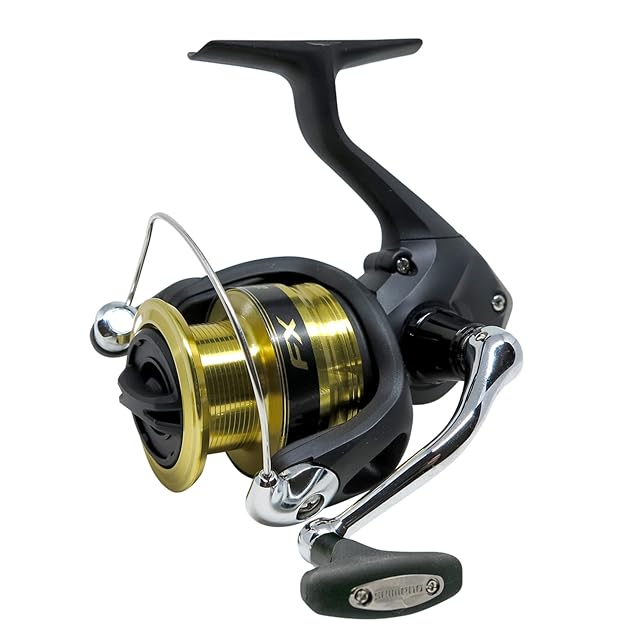
SHIMANO FX4000FC
Size 4000, front drag — no further figures published
A 4000 from a known house at under twenty-five euros, with nothing published behind the size.
Best for: A second 4000 reel, or a first one where the price decides
Getting started
The commonest mistake in a first tackle purchase is buying two rods and no landing net. This list is ordered by what changes an outcome rather than by what costs most, and everything on it is here because its listing publishes enough to be checked.
Five purchases, and the order is the whole argument.
Five metres of glass fibre, 1,15 m packed, with the rig already made up and a disgorger in the box. There is no reel, no cast and no rig to tie: it fishes the day it arrives.
On a canal or a small pond at five metres, that is not a compromise — it is the method that catches most.
A size 4000 with a front drag, from a house everyone knows.
Read what the listing does not say: no ratio, no weight, no capacity, no bearing count, no drag figure. At this end of the shelf the badge is the specification, and it is worth knowing that before you compare it with anything.
3,30 m, rated to 120 g, 3+2 pieces, carbon. The 3+2 is the number to read: three sections and two quiver tips, where the rods further up this shelf give three.
Four lines of published specification, which on this shelf is more than most.
Before the second rod, before the box, before anything else. A fish drawn to the bank and lost at the net is a fish lost entirely.
This one extends to 130 cm, folds to 42 cm and publishes a maximum load of 3 kg — a limit stated out loud, which almost nothing else on that shelf does. Its own title says carp. Believe the 3 kg.
100 × 30 cm, ultralight, with the tape printed along the edge so the fish lies on padding rather than on print.
The listing names undersized fish specifically — the ones going straight back, and the ones most often handled on dry gravel. It is small enough to live in the rucksack permanently, which is the only mat that ever gets used.
Line, hooks, floats and shot, all consumable and all on this site. Read the monofilament shelf with your eyes open: five of the seven publish a diameter and a breaking strain, and two publish neither — a listing that calls a line calibrated and gives no figure has told you nothing.
Size 4000, front drag — no further figures published
A 4000 from a known house at under twenty-five euros, with nothing published behind the size.
Best for: A second 4000 reel, or a first one where the price decides
Because at close range it catches more and asks less. The pole set here arrives with the rig already made up and a disgorger in the box, so there is no reel, no casting and no rig-building to learn first. On a canal or a small pond it will out-fish a rod for the first season.
If you are returning fish, yes, and you will be. A fish on dry gravel loses the mucus layer that protects it. The mat here is fifth on the list because the first four have to exist for there to be a fish at all — not because it is optional.
Line, hooks, floats, shot and bait. Those are all on this site on their own shelves and they are consumables rather than purchases — the float sets here go down to a published 0,6 g capacity, and two of the hook sets pair every hook size to its own line diameter.
The first three are the outfit and the last two are the responsibility. If your budget stops at four, drop the feeder rod and not the net.
The models here come from the catalogue of this site. Specifications are those published by the manufacturer and on the Amazon product page; prices are what Keepa reported on the date below, and both move. The ranking uses declared specifications, the balance of stated strengths and limitations, and price. No product on this site has been physically tested, and nothing here claims otherwise.
Last checked on
Tackle gets bought the week before the trip, which is the worst possible moment to judge a price: demand on these shelves climbs from March and falls away after September, so a figure struck through in June says nothing whatever about what the same reference cost in December. UniverTrack keeps a week-by-week history for each retailer, so a reduction can be held against a figure somebody actually paid rather than one written for the banner — and it says when the moment to order has genuinely come.